
Every consulting practice eventually hits the same wall: each new engagement starts closer to from scratch than anyone would like to admit. A different PM brings a different template. A different partner runs governance a slightly different way. Client visibility depends on whoever's staffed on the account and how disciplined they personally are about status updates.
None of this is a talent problem. It's a standardization problem — and it caps margin and client trust in ways that are easy to miss engagement by engagement, but add up firm-wide.
What the lack of standardization actually costs
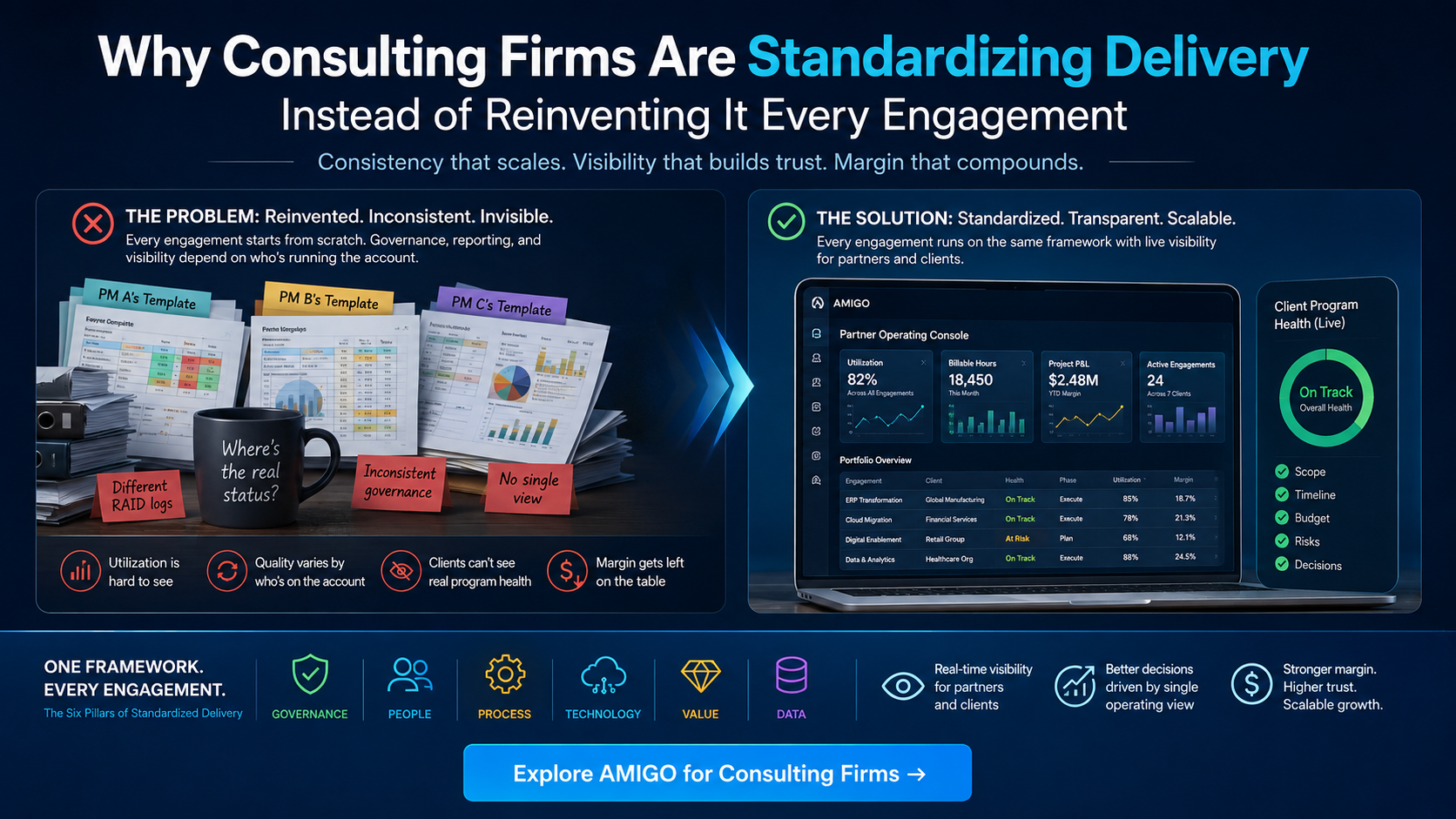
Utilization is hard to see across engagements. Without a single operating view spanning every client, partners are left estimating utilization and billable hours from a patchwork of individual project trackers, which makes accurate resourcing decisions genuinely difficult.
Every engagement reinvents governance. If each program manager sets up their own version of RAID logs, phase gates, and decision tracking, quality varies by who's running the account — and clients notice the inconsistency, especially ones running multiple engagements with the same firm.
Clients can't see what the Big 4 also can't show them. Most clients evaluating consulting partners have been burned before by a program that looked fine in status meetings and wasn't. Firms that can offer real-time visibility into whether a transformation is actually on track — not just a monthly status deck — have a genuine differentiator, but only if that visibility is built into how they deliver, not promised as a one-off.
Margin gets left on the table. Standardized delivery isn't just about consistency for its own sake. A single operating view across utilization, billable hours, and project P&L is what lets a firm actually see where margin is being won or lost across the portfolio, instead of reconstructing it engagement by engagement at quarter-end.
What standardized delivery actually looks like
The firms solving this aren't asking every PM to individually get better at governance. They're putting every engagement on the same underlying framework, so consistency doesn't depend on any one person's discipline:
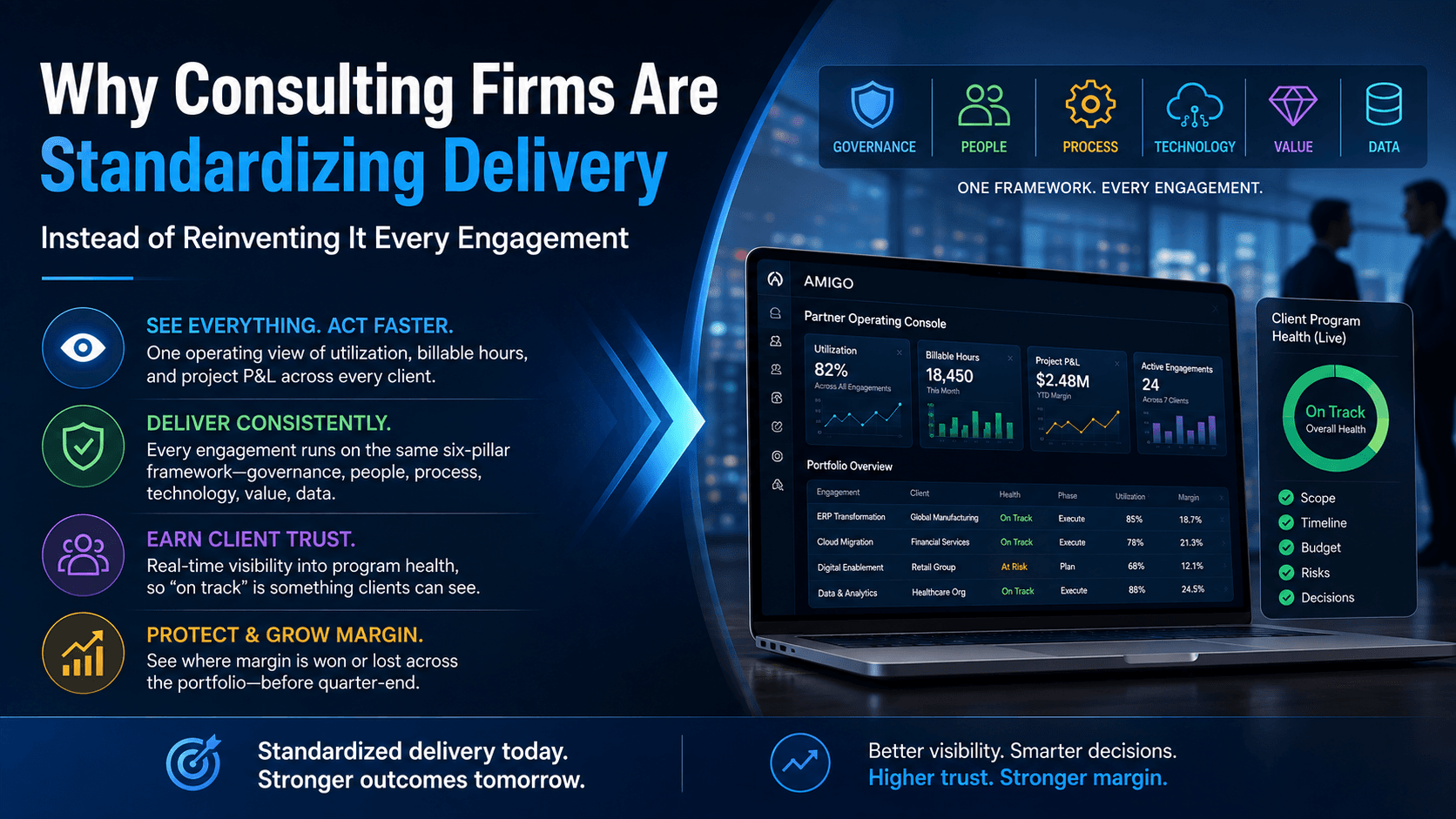
- Every client engagement run on the same six-pillar framework — governance, people, process, technology, value, data — regardless of which PM is staffed
- A single operating console giving partners live visibility into utilization, billable hours, and project P&L across every client at once
- Real-time client-facing visibility into program health, so "on track" is something the client can see, not just something they're told
Why this matters more now, not less
Clients evaluating transformation partners increasingly expect the kind of real-time visibility that used to be a differentiator and is quickly becoming table stakes. A firm still running each engagement on a bespoke mix of spreadsheets and individual PM habits is competing against firms who can show a client their program health on demand.
Standardizing delivery isn't about constraining how consultants work. It's about making sure the client experience — and the partner's visibility into margin — doesn't depend entirely on which team happens to be staffed on the account.