
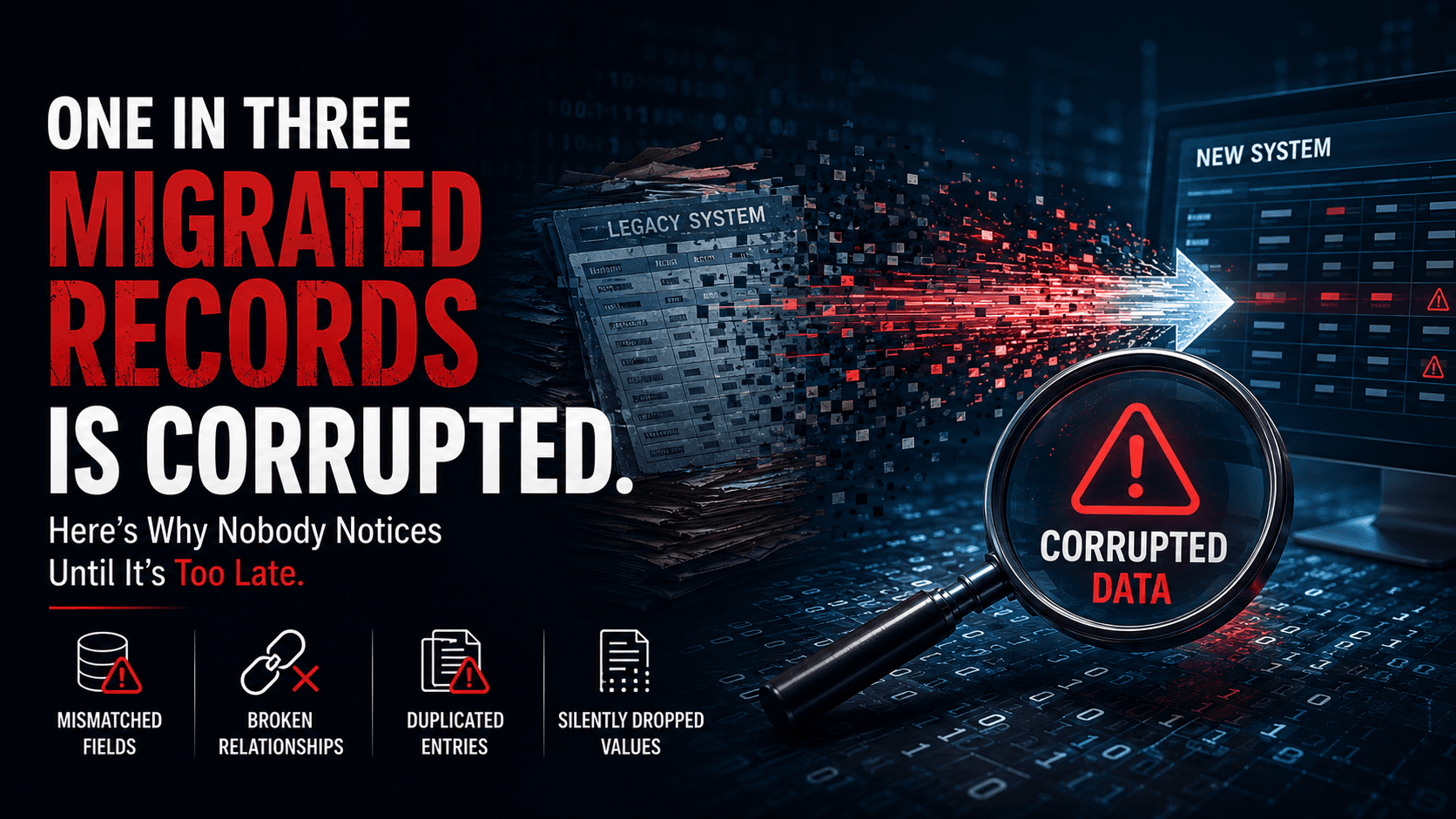
Data migration is usually treated as a technical checkbox: extract, transform, load, done. But roughly a third of records in a typical enterprise migration come out the other side wrong — mismatched fields, broken relationships, duplicated entries, silently dropped values. And in most programs, nobody finds out until the new system has been live for months and a report doesn't tie out.
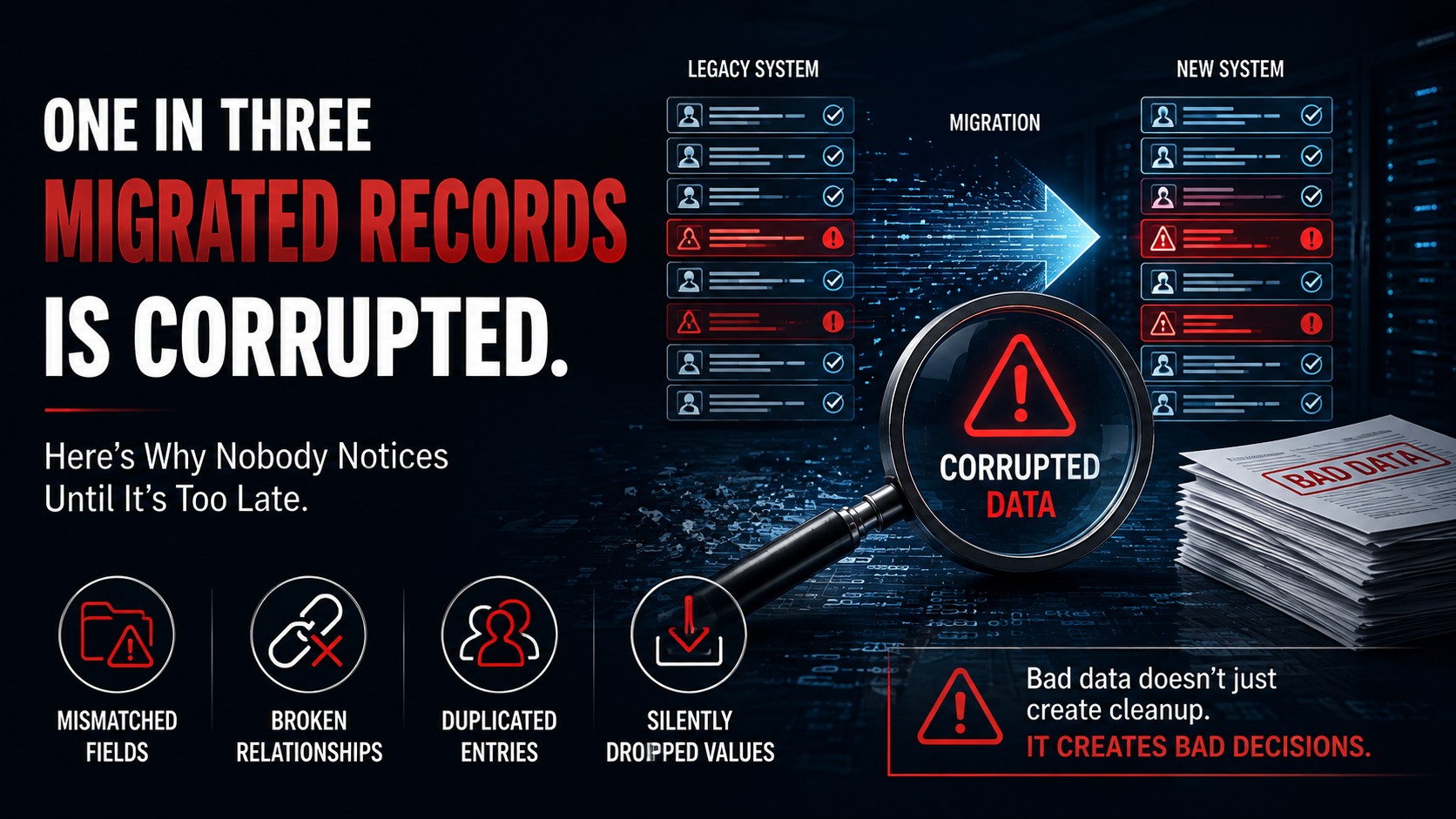
By then, the bad data isn't a data team problem anymore. It's everyone's problem.
Why migrations fail quietly instead of loudly
A failed migration rarely looks like a failure at first. The load job runs, the record counts roughly match, the go/no-go meeting gets a green light. The corruption is in the details: a customer record that migrated with the wrong region code, a vendor relationship that silently dropped during a table join, a date field that shifted formats and now sorts wrong in reports.
None of that throws an error. It just quietly produces wrong answers, which get built into dashboards, which get presented to leadership, who make decisions based on numbers nobody validated at the source.
Where the corruption actually comes from
Legacy data was never as clean as anyone assumed. Old systems accumulate two decades of manual overrides, deprecated fields still in use, and "temporary" workarounds that became permanent. Migrating that data as-is just moves the mess into a new system with a nicer interface.
Field mapping gets rushed. Under schedule pressure, mapping decisions get made quickly, sometimes by whoever's available rather than whoever understands what a field actually means in both the old and new business process. A field that meant one thing in the legacy system can mean something subtly different in the new one.
Validation happens on volume, not accuracy. Most migration sign-offs check that the number of records loaded matches the number extracted. That confirms nothing dropped. It confirms nothing about whether what landed is correct.
Nobody owns reconciliation after go-live. Migration teams are usually structured to disband once the load is complete. But the real test of data quality happens over the following weeks, as the business actually uses the data — and by then, the people who understood the mapping decisions have moved to the next project.
What actually catches this before it becomes a live-system problem
Row-by-row validation against defined tolerance bands, not just record counts. A migration audit that checks whether values fall within expected ranges and relationships catches the quiet errors that volume checks miss entirely.
Master data governance rules established before migration begins, not discovered afterward when a report looks wrong. Someone needs to own what "correct" means for every critical field, in writing, before the load runs.
A reconciliation window built into the plan — weeks, not days — where business users actively work the new data and flag discrepancies while the mapping logic is still fresh in someone's memory.
The pillar underneath the other pillars
Bad data doesn't just create a cleanup task. It corrupts every decision built on top of it — governance dashboards, adoption metrics, ROI tracking. A transformation program can get governance, people, process, and value all right and still fail, if the data underneath all four is wrong.
If your migration plan measures success by record count alone, it's worth adding a validation layer before go-live — not after finance asks why the numbers don't reconcile.