
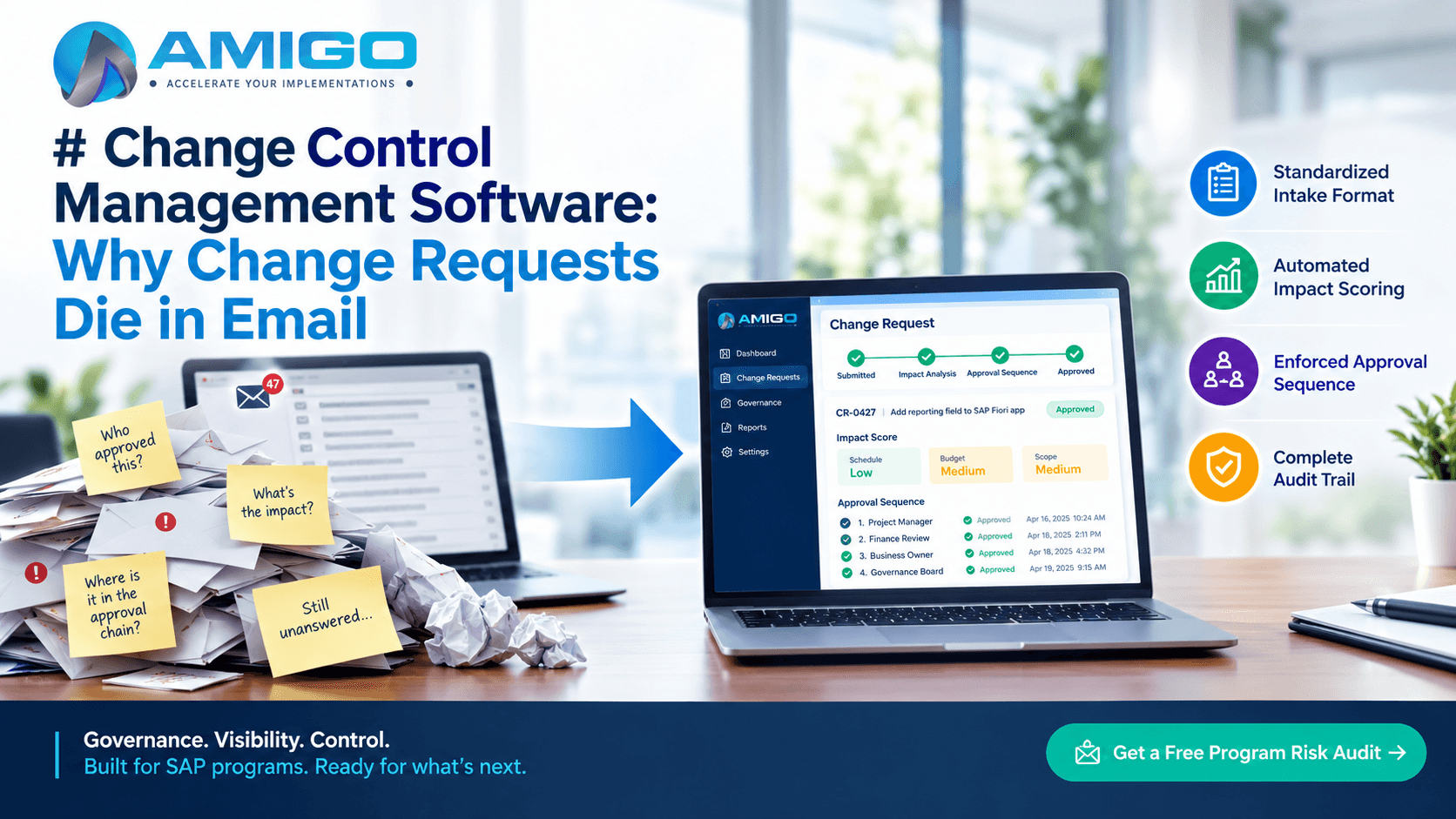
A change request that moves through email has no consistent scoring, no enforced approval sequence, and no reliable audit trail. It gets approved because the right person happened to reply that week, or it sits unanswered because the thread got buried. Either outcome is a governance failure — and most programs discover it only when a change that should have been rejected makes it into production, or one that should have been approved gets forgotten entirely.
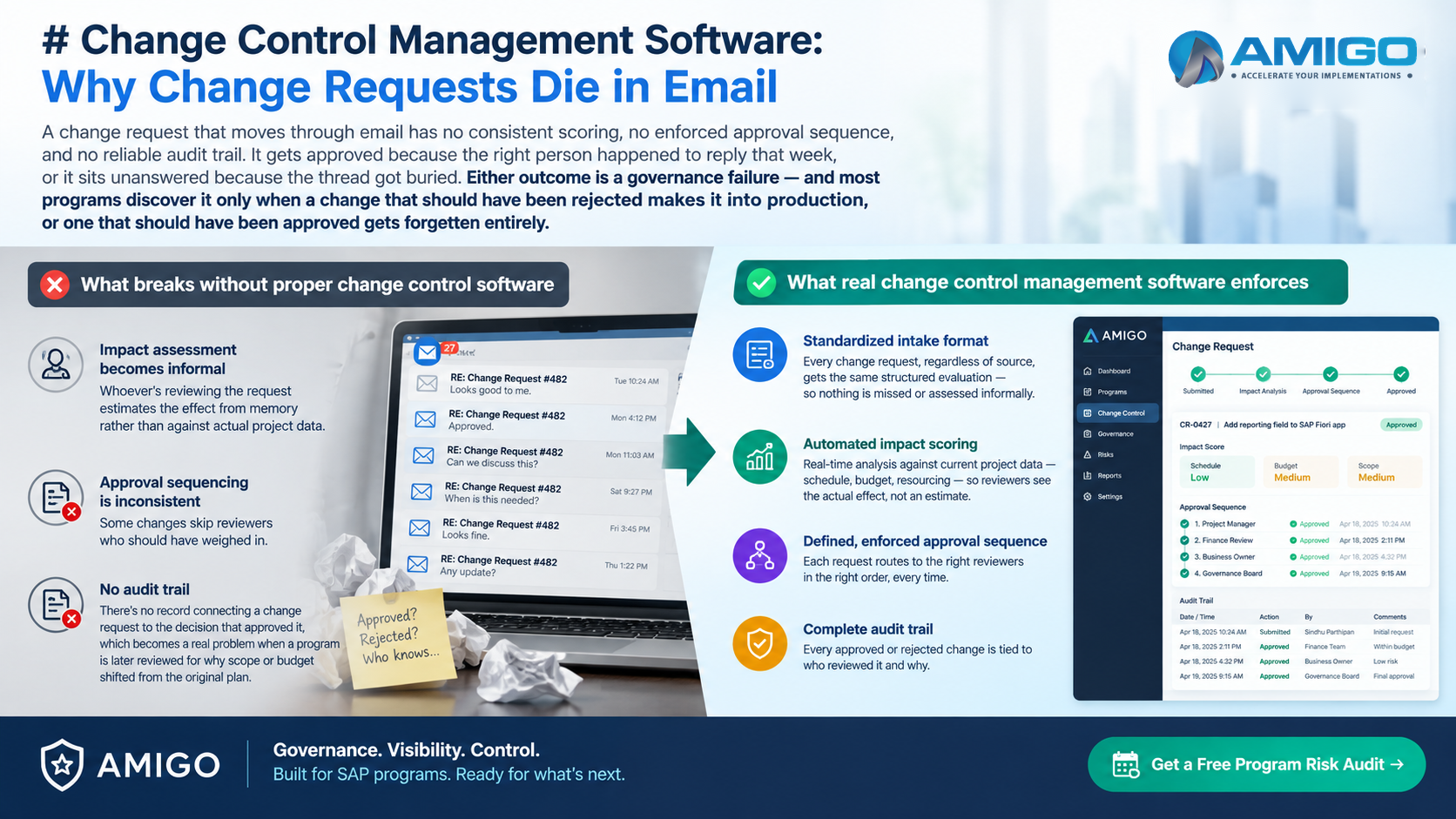
What breaks without proper change control software
Impact assessment becomes informal — whoever's reviewing the request estimates the effect on schedule, budget, and scope from memory rather than against actual project data. Approval sequencing is inconsistent, with some changes skipping reviewers who should have weighed in. And there's no audit trail connecting a change request to the decision that approved it, which becomes a real problem when a program is later reviewed for why scope or budget shifted from the original plan.
What real change control management software enforces
A standardized intake format for every change request, regardless of source, so nothing gets evaluated informally. Automated impact scoring against current project data — schedule, budget, resourcing — so reviewers see the actual effect, not an estimate. A defined, enforced approval sequence that routes each request to the right reviewers in order. And a complete audit trail tying every approved or rejected change back to who reviewed it and why.
AMIGO routes change requests through a governed pipeline as part of its Governance pillar, with full audit trail and impact scoring built in rather than added on. This is especially built out for SAP programs, where change control needs to align with Activate's phase-specific review requirements. Full platform detail is on the features page.